
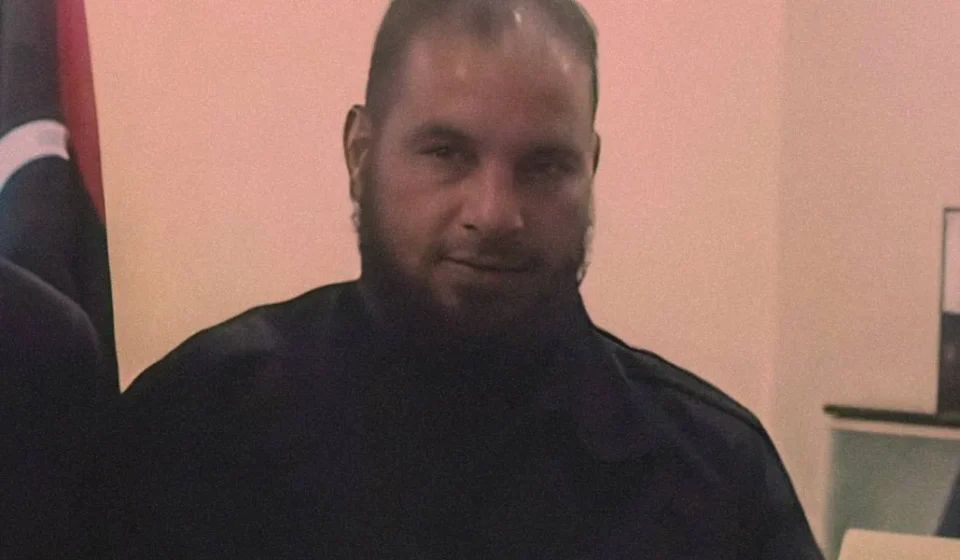

Summary: Judges of the International Criminal Court (ICC) ruled on Thursday that Libya's Khaled Muhammad Ali al-Hishri, who is accused of running one of Libya's most notorious prisons, could be charged with multiple charges.
The judges of the International Criminal Court (ICC) ruled on Thursday that multiple charges could be brought against the Libyan suspect Khaled Muhammad Ali al-Hishri, who is accused of running one of Libya's most notorious prisons, paving the way for his trial.
Al-Hisheri, 48, faces 17 charges of crimes against humanity and war crimes, including persecution, enslavement, torture, rape, and murder, in the period from 2014 to 2020.
Prosecutors say that al-Hishri supervised the women's ward in Mitiga prison, a detention center run by the Counter-Terrorism and Organized Crime Deterrence Service in Libya.
The prosecution also notes that thousands of people have been unlawfully detained, held in inhumane conditions, and systematically ill-treated and tortured inside Mitiga prison.
However, at previous hearings, Hichri's lawyers said that their client denies the charges against him.
This week, the judges of the International Criminal Court confirmed their jurisdiction to hear the case, rejecting an appeal by the defense in which it tried to argue that the case was not covered by the UN Security Council resolution, which gave the court legal authority to prosecute perpetrators of atrocities in Libya.
The Hichri case will be the first trial before the ICC focused on war crimes and crimes against humanity in Libya.
The ICC has been investigating allegations of war crimes and crimes against humanity in Libya since the UN Security Council referred these cases to the court in 2011, following a NATO-backed uprising.
No date has yet been set for the trial to begin, but it is expected to begin in early 2027.
On Thursday, UN experts expressed “grave concern” at reports of thousands of migrants from sub-Saharan countries being arbitrarily detained and mass expulsions.
The US president's adviser on Africa and the Middle East, Mosaad Boulos, is intensifying his efforts to bring eastern and western Libya closer together in an attempt to reconcile powerful men.
Amid an internal split, the Supreme Council of State in the Libyan capital Tripoli plans to hold elections for its presidency at the end of this month, amid competition and conflict between different currents.
Original source: aawsat.com