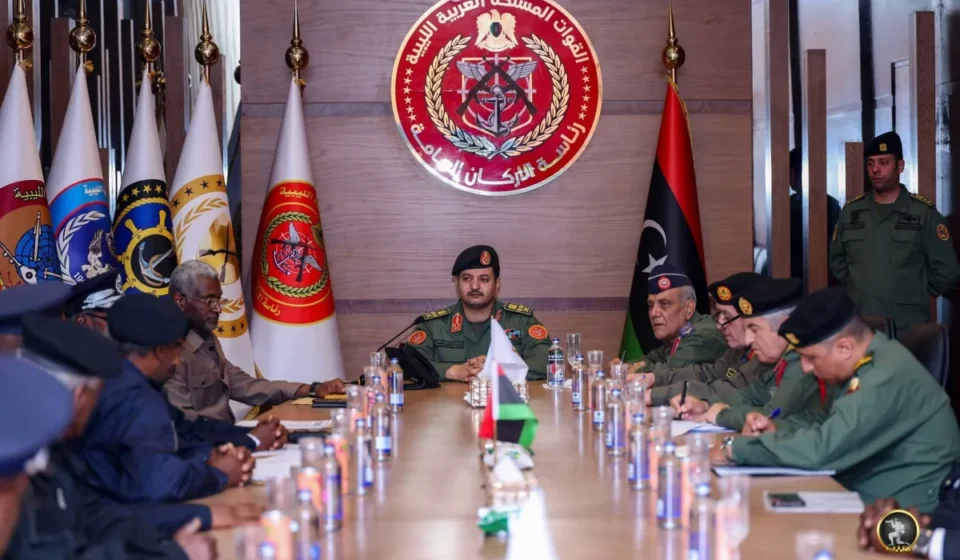

Summary: Southern Libya witnessed a new escalation on the ground, after the Libyan National Army launched a large-scale military operation to hunt down rebel armed groups led by Muhammad Wardjo.
The Libyan south witnessed a new escalation on the ground, after the Libyan National Army launched a large-scale military operation to track down rebel armed groups, led by Muhammad Wardago, commander of the so-called"Southern Liberation Operations Room", in the latest confrontation that reflects the fragility of the security situation in the triangle. borders with Chad and Niger, which is one of the most active areas for smuggling networks and armed groups.
These platforms pointed to the participation of military units, including members of the 604th Brigade, in combing and pursuit operations in the border areas, with the publication of videos that they said documented the targeting of sites belonging to the armed group, and the arrest of a number of its members, confirming the continuation of operations to narrow the noose on those groups. She also spoke about the presence of Chadian armed elements operating in the area, which links the operation to efforts to reduce smuggling and infiltration across the southern border.
On the other hand, the rebels of what is known as the "Southern Liberation Operations Room" published video recordings and pictures they said were of prisoners of the "National Army", claiming that they receive treatment that preserves their dignity, rejecting accusations that their members are "gangs" or "mercenaries", and published a recording A photographer released a member she said was affiliated with the National Army, without comment from the army.
The rebels also denied that large-scale clashes had taken place, and said that the burning vehicles that appeared in some sections belonged to the other party, saying that they had seized weapons and vehicles during their recent operations.
The renewed confrontations reflect the continued competition for spheres of influence in southern Libya, which represents a strategic node because of its link to the borders with Chad, Niger and Sudan, as well as being a major corridor for irregular migration and smuggling of fuel, weapons and goods, which makes controlling it A permanent target for military forces and local groups.
In parallel with the developments on the ground, social and tribal events issued statements in support of the movements of the National Army. The Municipal Council and the Social Council of Tribes, Notables and Institutions of Civil Society and Youth in the Municipality of Jufra condemned what it described as "criminal attacks" on the southern border, expressing its support for the military forces in carrying out their tasks, and calling on neighboring countries not to allow armed groups using their territory as a base of operations.
The Supreme Council of Sheikhs and Notables of the Fezzan also issued a statement condemning the attacks carried out by "outlaw gangs" on the southern border, warning of being dragged behind attempts to return the country to the square of chaos, and stressing the need to support state institutions in establishing security. and stability in the border areas.
Judges of the International Criminal Court (ICC) ruled on Thursday that Libya's Khaled Muhammad Ali al-Hishri, who is accused of running one of Libya's most notorious prisons, could be charged with multiple charges.
On Thursday, UN experts expressed “grave concern” at reports of thousands of migrants from sub-Saharan countries being arbitrarily detained and mass expulsions.
The US president's adviser on Africa and the Middle East, Mosaad Boulos, is intensifying his efforts to bring eastern and western Libya closer together in an attempt to reconcile powerful men.
Amid an internal split, the Supreme Council of State in the Libyan capital Tripoli plans to hold elections for its presidency at the end of this month, amid competition and conflict between different currents.
With an American push, the Libyan capital, Tripoli, is experiencing more momentum on the file of unifying the divided military institution, in light of the confrontations waged by the "National Army in the south against (rebels)."
Original source: aawsat.com