
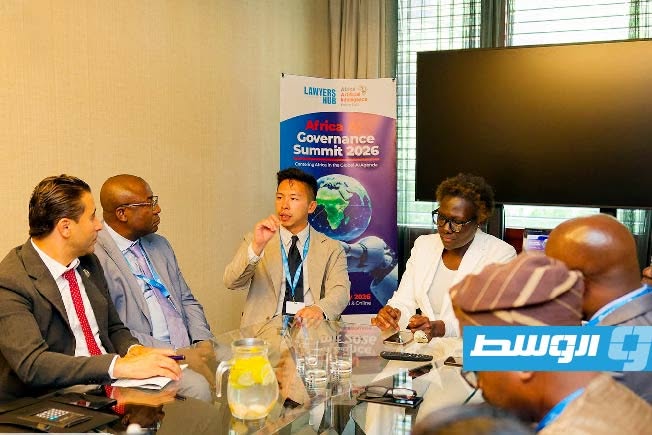

Summary: Minister of State for Digital Economy in the Interim Government of National Unity Ziad Al-Hajjaji attends an international event on financing digital sovereignty.
Minister of State for Digital Economy in the "Interim Government of National Unity" Ziad Al-Hajjaji participated in the work of the ministerial round table entitled "Financing Digital Sovereignty", organized by the "Lowers Hub" Foundation within the activities of the Geneva AI Week, and on the sidelines of the global dialogue of the United Nations on AI governance.
The ministerial table witnessed the participation of ministers and officials from African countries, as well as representatives of the United Nations Economic Commission for Africa, the World Bank and Google, where participants discussed mechanisms for financing digital transformation and enhancing the readiness of the African continent to develop and adopt Artificial intelligence technologies and building independent and sustainable digital systems, according to the "Our Government" page on Facebook today, Monday.
Investing in digital infrastructure Participants addressed ways to invest in digital infrastructure, enhance regional computing capabilities, develop joint programs to build digital skills, support innovation and startups, as well as expand cooperation with the private sector and international financial institutions to finance AI and digital transformation projects.
Participants stressed the importance of strengthening regional and international partnerships to accelerate the pace of digital transformation, and enable African countries to develop their technical capabilities, in a way that enhances their digital sovereignty and their ability to keep pace with global developments in the field of artificial intelligence.
Libya's participation in this ministerial table comes within the framework of enhancing its presence in international discussions related to the governance of artificial intelligence and the digital economy, building partnerships that contribute to the development of digital infrastructure, supporting national competencies, and enhancing digital sovereignty in line with Global technology transformations.
Original source: alwasat.ly